Showing posts with label teaching. Show all posts

Friday, October 01, 2021

Old Man Tree October 1

September of any school year is typically exhausting but September in pandemic school was well beyond that.  In the first full week, we quarantined more than 20 kids;  the next week brought another dozen at home.  Students have been a bit off the rails on the adolescent behavior front.  It’s been a challenging month.   Each day, I’d come home and take some time to admire Old Man Tree, the sentinel of time in my back yard and a reminder of the many things that endure even as life seems upside down.       


For all the difficulties of September, the teaching and learning - with every kid in class and none on Zoom - has been absolutely splendid.
  I love that part of school again and it’s a most-welcome development.    As we settle into October’s shortening day, learning feels almost normal.  Mother Nature has been kind to us when it comes to outside recess and the changing leaves are here.


Old Man Tree is getting ready for the next season.
 Under his careful watch, I’ll be ready as well.

Wednesday, March 10, 2021

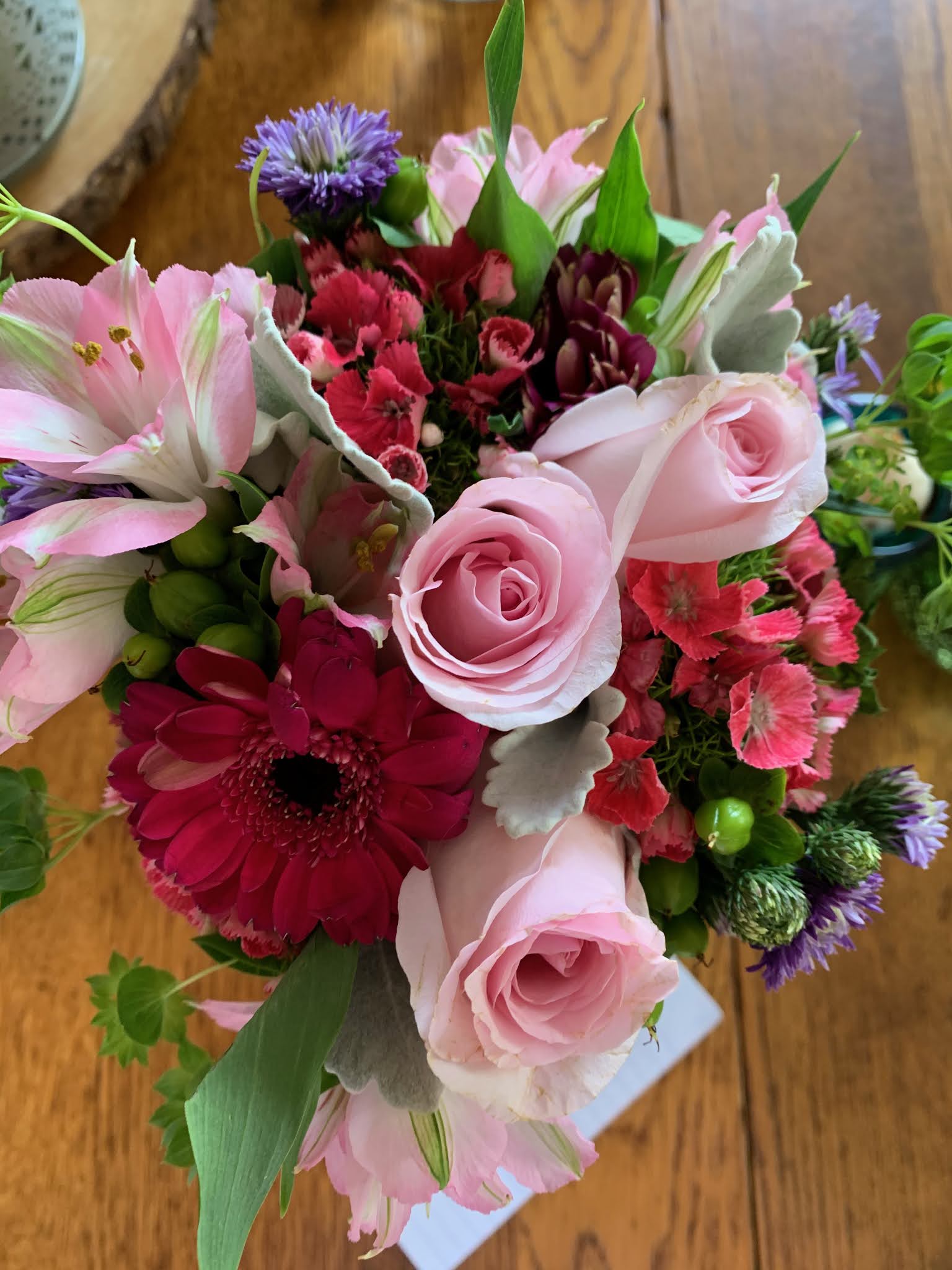
Flowers at Midweek!

This day is the halfway mark on the last week before Spring Break.  Flowers are in order and for a whole bunch of reasons.


It’s sunny today and temps may actually exceed 60 degrees.

I am wearing a Spring dress (with a warm cardigan - of course - but still……)

This school year has been so damn hard and the approaching Spring Break will get us over the hump to the last part of the year.  I don’t like to wish away time but teaching hybrid in a pandemic is ridiculously difficult for all of us - students, teachers, and parents.  The weeks we have been remote were also hard but remote is nothing compared to the challenge of teaching hybrid.  The other side of Spring Break is just nine weeks of April and May instruction, all more bearable because the end is in sight.


Last year’s Spring Break was no break for me as the school frantically set up for remote homebound remote instruction.  This year’s Break promises some actual time off.  Add to that the chance for some enjoyable meanderings in New Jersey, thanks to the fact that I am vaccinated, and I am giddy about the coming break.    

Thursday, February 18, 2021

Snow Day Grievances

With a Winter storm featuring 24 hours of snow on the horizon, last night my school made the call for a snow day today.  I was not mad about that because I love myself a leisurely morning and with classes cancelled I can freely indulge in such luxury.  The rest of the day will be given over to catching up with work —— new lessons for the 8th grade, comments home about quizzes and such, a calendar for the post Spring Break months, planning for a (fingers-crossed) in-person but socially distant closing ceremony for the 8th grade.  In short, there is plenty to keep me busy today.


Around 8:30 am I opened up my side of our school digital platform to find no less than 8 messages from students.  Several wanted to know if school was cancelled….all acknowledged that they had received the school message which read “…Thursday, Feb. 18 will be a snow day for all students.  All instruction and campus activities are cancelled.”  


Yikes.


A few more students sought to find out if the digital open note quiz, assigned three weeks ago and slated to close tonight at 8 pm, would have an extension because there was no class today.  


Ahem, hard NO.


A few more offered explanations for why they had submitted incomplete quizzes and were now sending additional answers to the quiz questions.   Would I please give them full credit?


I cannot even.  


At this juncture, I took a pause from school work and stuck my nose into a Miss Read book.  Her February in Fair Acre features early daffodils and the smell of Spring.  That’s a balm to my tired soul and spirit.  When I return to the business of quiz grading and such, it will be with a patient heart.  Pandemic school is hard for us all.  Winter makes it harder.  We are all worried and afraid.  But kindness is free and I will find some hope; I always do.


The quiet fall of snow is lovely.  We have heat, running water, and electricity in my corner of the nation.  Winter can’t last forever and March is on the horizon.  Sassafras Spring will surely arrive even sooner.  We can do hard things.  And we will.

Thursday, February 04, 2021

Quarantine’s End

T and I have been in quarantine since January 20.  Two weeks and three negative tests later, we’ve shoveled ourselves out from the snow and today I return to school in person.  I’ll be teaching in the hybrid model we’ve used all year and so I don’t really expect to see that many students in person in my classes — usually no more than 4 students are in the room; most Zoom in to school — but I am glad of the chance to leave the house and teach from my classroom.  

I taught from home while I was in quarantine but it was hard and a huge burden on the co-workers who were called upon to hook up the classroom into my Zoom.  The longer I teach hybrid, the more frustrating I find it.   But that is a post for another day.  Today is a day to be glad and grateful for my blessings, so I won’t grumble and I will hope, as I do every day, that my turn for a vaccine comes soon.

Saturday, January 09, 2021

The Deplorables

 I had so many thoughts about Wednesday’s events tumbling about in my head as I tucked into bed that night,  My mind was still whirring when when I got up on Thursday to catch up with the overnight news.  My challenge that day was too quickly make sense of it all so that I could talk it over with my three classes of 8th grade Civics & Citizenship students, using our shared knowledge of Civics and history to try and understand.  When I first proposed teaching this class, I thought that the topic was timely.  But I had no idea how timely it would be.  Throughout the 2020 election season, we’ve explored and discussed the events of the day.  When we broke for Winter Break, my plan for Thursday’s class had been to review how Electoral College certification worked and then to discuss the Georgia Senate elections.  I was ready for that.  Insurrection by Trump’s merry band of deplorables took me by surprise.  


In hindsight, that was foolish on my part.


When class started today, the language of choice for participants in the Capitol Hill takeover was protesters turned rioters.  By the afternoon, they were insurrectionists.  That word gave my afternoon class a better tool to wrap their minds around the events.  The promising news is that the 8th grade saw the events for what they were: an intemperate and foolhardy collection of people bent on while denying the legitimacy of our most recent democratic election because the outcome did not suit their desires.  My students also understood quite clearly that the rules for this mob were different than the rules that BLM marchers faced in their Summer protests. 


That ability to see truths will serve them well as our understanding of the January 6 Insurrection unfolds.  For my part, I hope that the collective memory that lingers from the event is of the way that American democracy endured and triumphed in the aftermath.  As an American, that must be by goal.  I am here for the hard work to come.  For now, that will have to suffice.

Monday, September 21, 2020

Doing Hard Things

My second week of hybrid learning school starts today.  When we decided to invite half of the students on campus for each week (the other half learn remotely), I knew that we had selected the hardest of all teaching options.  Last week, as classes got underway, the difficulty of the choice was confirmed.

This week, the students in class last week will be remote and the second crop of students will be present in class.  Some families have opted to be all remote and with those kids mixed in, more than half of each class I teach is off campus each day.  Teaching school with masks and social distancing, with more than half of each class learning remote, is more than exhausting.  It’s also really, really hard.  


Though my classroom is familiar (albeit with plexiglass and desks spaced 6 feet apart), so much of class is different, starting with the tiresome but necessary mask worn while teaching to masked face students in person while the rest of the class chimes in via Zoom.  For years, I’ve taught lessons using an iPad to broadcast notes on the screen.  In hybrid learning, I must choose being seeing the faces of my remote students or broadcasting my notes.  I’ve chosen student faces but that makes the task of teaching students how to take notes much harder.  Lessons take longer and while I don’t feel the pressure to cover material at the same pace as the pre-pandemic world, I’m increasingly aware of what we lose in this method of schooling.


For now, I persevere, aware that there is no other option available.  I relish the laughter and chatter of students doing what middle schoolers do.  I’m also aware of the relative privilege of my students, all of whom have Internet access and a brand-new iPad; most have two devices while they learn remotely.  If it’s hard for us, I can only imagine how much harder it is for teachers whose students have so much less to work with.


But that doesn’t mean my exhaustion isn’t real.  That doesn’t mean my lift isn’t heavy.  Each day I remind myself and then my students that we can do hard things.  And each day we do the hard thing moves us one day closer to a brighter horizon.  


And with that, a new week of hard things begins.

Thursday, June 11, 2020

Civics and Citizenship

For most of my time as a middle school teacher, I’ve taught at 7th grade history class that spans the time from the founding to the issuing of the Emancipation Proclamation.  I know the period well and I like to study and teach it.  I’ve used the point at which the Constitution is adopted to insert some Civics into the mix but the focus has been more on early American history.


Last fall, as my colleagues and I were thinking about revisions of our curriculum, I knew that a change I wanted to make was to insert more civics education into the experiences of my middle schoolers.  We decided that we could revise 8th grade history to take on this challenge.


So I will be teaching a new course come the fall, a class to be called Civics and Citizenship.  We’ll explore American history from the vantage o=point of the meaning of the Reconstruction amendments to the Constitution.  The course is driven by the meaning of those amendments and the ways in which the ending of slavery and the requirement of equal protection of the law seeks to both fulfill the promise of the Declaration of Independence and makes our Constitution a meaningful and important document.


Since I first conceived of the idea behind the course, I’ve been reading and thinking about it.  This summer, as I’m on the runway to the launch of the class,  I am organizing lessons, reading assignments, and pulling together the documents that will be the foundation of the course.  As I do that, I’m thinking about what Civics and Citizenship mean and for the next year, as the course is launched, I will record my thoughts here.


I’m excited to create and teach this course and even more excited to do it now, when thinking about our history and what it means to be American is as important a task as it ever was.

Monday, March 30, 2020

Remote Learning is Live

Spring Break  - the oddest Spring Break of my life - is over.  Classes resumed today and so this morning I got up, had a shower, and came downstairs to work.  Armed with a cup of coffee, I set to teaching remotely from my study.  My classroom is now in a basket.


I’d spent a part of every day for the last two weeks making plans for this kind of teaching and learning and while I started the day with some nervousness, class went well.  At our next class meeting we will practice a teleconference.  Normally, in class my hands and mind are busy with kids.  That’s also my focus in remote class, though it feels substantially different.  I’ve been teaching so long that trying these new learning muscles is an interesting phenomenon.    For a while, there will be no teaching on auto pilot.  These days, that's a good thing ----- days with a purpose beyond worrying about things that I cannot control is rather a good feeling.


Friday, September 20, 2019

Representation Matters


This week, with the death of Cokie Roberts, as I teach a diverse group of 7th graders about colonial society, I am reminded again how very much representation matters.  Roberts, a long-standing political reporter and commentator, was an enduring part of my world.  I listened to her on NPR and watched her on ABC news.  She always brought attention to women, especially women leaders, and gave me an abiding sense that women could matter in the political world.  

If that belief was ever tentative (and I don’t think it was), these days it’s foremost in my mind.  I raised a son who learned to value and enjoy women’s sports and I am proud that at the age of 19 he considers himself a feminist and an advocate for women.  I teach in diverse classes with 12 and 13 year old girls and boys; the girls coming of age in a society that regulates their bodies and is prone to underestimating their brains.  These years are formative and in my class I emphasize the empowerment of women.  I do this for the benefit of all of the students and I search for the examples of representation that show the truth of my words.

But for all of these efforts, it’s examples and representation that matters.  When we open our textbook and look at the picture of delegates to the Continental Congress as they contemplate declaring their independence, we mark who is missing.  We read Abbigail Adams’ letters to her husband, present at that meeting and prepared to ignore his wife’s request that he and his peers remember the ladies.  We don't forget the ladies.

I remind them all that someone must go first for the rest of us to follow.  I show them the Americans who made room for others and I emphasize the power of that small change.  And over and over again I remind them that representation matters.  Cokie Robert's passing is a loss for all of us.  I will always remember her with gratitude for the way she always showed me the enormous power of representation.

Friday, May 17, 2019

History Lessons


I’ve been teaching U.S. History to the 7th grade since 2015 and from the very beginning I’ve loved the challenge of this task.  The class covers the period from colonial settlement to the election of Abraham Lincoln in 1860 and I’ve adapted lessons and activities from the material I used to to teach this period to college students and 11th and 12th graders.

People often find that news surprising; the fact that I can use variations from lessons first developed for college students.  I think this only surprises people who don’t know 7th graders.  For all their bluster and sass, the 12 and 13 year olds who make up my classes are intellectually engaged and honest; they want to be taken seriously and serious ideas ensure that is exactly what happens.  There are some ideas that confound them (transcendentalism, for one, but I kinda feel the same way on that front) but they are open-minded and wide-eyed, with a willingness to take risks in the world of ideas.  Because I teach Middle School and needn’t adhere to an AP curriculum or a college catalog, we have time to get into the weeds of complicated ideas and really think them over.

Unlike older teens, they have yet to develop much distrust in adults.  There is some bluster but not far underneath is a genuine desire for adult approval.  They are often moody and emotional (I joke that 7th graders have two speeds: thrilling excitement and miserable despair)  but in class they expect me to manage our time and they follow my lead.  When I tell them we are historians together, they believe it and act accordingly.

Each year, I have the pleasure of seeing these young men and women as they make discoveries about our national history and how it plays out in today’s world.  This year, my students are creating an historical trading card for a person in 18th or 19th century history.  The list of eligible people is diverse, as befits the diversity of my school.  One of my students is studying the life of Nat Turner.  As part of his research, he learned that as a grown man, Turner was owned by a 9 month old baby.  He came to me doubting this fact and asked if it could be true.

“Yes,” I said, “and that is the utter irrationality of slavery in a nutshell.”  The student in question knew that slavery was wrong; knew that it was inhumane and rooted in racism.  But this discovery drove the point home in a way I had yet to manage.  And that it was his discovery means a splendid thing: he will remember it for the whole of his life.  There is a power in this sort of learning and it is my daily blessing to be a part of it.


Tuesday, September 04, 2018

First Days and Fresh Starts


Every year at the closing ceremony for the Middle School, I watch 8th graders and their parents smile as they celebrate the coming excitement of high school.  For the most part, this celebration is dry-eyed.  Middle schoolers are in the midst of a confusing transition and the few parents wrap up their child’s time in middle school with the wish to have those years back.  But I know how fast high school will pass and I cherish the tweens and teens in my care, even when the journey is difficult.

Today is the first day of class at my school.  JT also starts classes at Springfield College, where he’s been for the last two weeks enjoying Cross Country pre-season training.  For him, it’s the first day of his next academic journey.  I’ve had many first days of school but I still enjoy the tradition of a fresh start.  This year it comes with the reminder that time passes quickly.  I plan a year to make the most of it.  

That’s happy! 

Tuesday, November 28, 2017

Neither Great Nor Better

I’ve taught American history for many years.  These days, I teach 7th grade students.  7th graders are at an interesting point in adolescence, at the corner of young adulthood and childhood with both experiences on their minds.  They long for independence, but aren’t always sure what to do with it.  Their brains are moving fast and are occasionally beset by strong emotions that feel new and mysterious and, sometimes, overwhelming.  As each of them sorts out their identify and place in the world, they are sometimes unkind to one another (or themselves); at the same time, they are the first to point out unkindness in others.   It’s easy to underestimate the abilities and talents of 7th graders because they are prone to underestimating themselves.  But it would be foolish to do so because 7th graders are capable of understanding and communicating in sophisticated ways about complex ideas.  In this, they are an absolute wonder to teach because they are absorbing and learning so much.  I learn from them every day and I am aware that they are learning from us all the time.

I teach my 7th graders American history, from the period of colonial settlement in 1609 all the way to the Civil War.  We take on some very difficult topics as we explore these years.  We study the founders and wrap our minds around the philosophical origins of the American movement toward independence.  Together, we read the founding documents and explore the claims made in the Declaration of Independence, the Constitution, and the Bill of Rights.  We also explore the disappointing elements of the American story, including the lives and experiences of the Native tribes that were here when colonists arrived.  We talk about the origins of the “original sin” of slavery and we go to lengths to understand both the lives of enslaved people and the lasting legacy of the institution of slavery.

It is in the inequities and injustices of the American story that 7th graders step out of themselves to see both a world that was and a world that can be.  As we wrestle with a document that claims all men are created equal even as it excludes native tribes, enslaved people, and women, we come to understand the complexities and injustices present in the human story; in the American story.

My 7th graders know that painting all native tribes with the broad brush of the name of one of the more well-known Indians is both offensive and ignorant.  In fact, my 7th graders know the real story of Pocohantas.  They understand the complexities of her experience.  They know better than to objectify or dismiss tribal people because they know better than to objectify or dismiss anyone.  Like all of us, it does not make 7th graders better to live in a world where the president’s casual racism is the accepted and tolerated order of the day.  
Greatness comes from honoring one another’s accomplishments, from making an effort to stand outside one’s cultural experience to understand the experiences of others.  It comes from tolerance and empathy and kindness.  It comes from the daily effort to be better.  It comes from the struggle to give promise to the claim that “all men are created equal.”  And it should come from leaders who help us to do these things.

Sunday, January 22, 2017

Real Life Conversations with my Boss: Making America Great edition

The backstory:  Friday’s swearing in coincided directly with Middle School lunch and so we opted not to watch the festivities.  In history classes, we discussed the importance of the peaceful transition of power and the historical nature of the changeover.  But we otherwise skipped out on a live viewing of the Cheetoh Kleptocrat’s speech, figuring we could watch later that day were the speech to be along the lines of Jefferson’s gracious and reconciliatory 1801 inaugural address, a subject all of our 7th and 8th graders have studied at length.  The principal and I read the speech over lunch, prepared to adjust our afternoon.  There was none of Jefferson’s gracious reassurance in DJT’s apocalyptic description of America.  We were horrified.

DJT:  “America will put its own interests first. America first. America first.”

B: “Great, that’s an open invitation for ISIS to come over here and cap us in the ass.”

Needless to say, the rest of the school day proceeded unaltered.

Wednesday, December 28, 2016

12 Months of Miss Read: December

The backstory: At the start of 2016, I pulled out my very favorite Miss Read book, Village Centenary.  The novel is structured in months and each chapter explores a month in the year of a village school that is celebrating its 100th anniversary.  This year, my own school is celebrating its 250th anniversary and as we think of our past and look to our future, I thought that Miss Read would make a lovely companion for me.  For each month of 2016, I plan to read Miss Read’s reflection on the month.

Miss Read is a pseudonym for Dora Jessie Saint, an English author who wrote between 1955 and 1996.  Her novels were tales of every day life in small English towns.  Village Centenary is set in Fair Acre, an imaginary Cotswold community.  As is the case in nearly all of the Fair Acre novels, the novel is written in the first person and it is through our narrator, school teacher Miss Read, that the story unfolds.


Miss Read in December
Miss Read ends her school’s 100th year with a celebration at the Fair Acre schoolhouse, one that features re-enactments from the school journal, a daily report that the head of school writes.  The re-enactments are a collection of charming, amusing, and poignant periods in Fair Acre School’s history, meant to include the community and celebrate both the history and changes the school has experienced over the years.  Miss Read’s celebration closed with the school annual December tradition, a holiday tea.

At my school, we’ve had various celebrations of our school’s 250 years, including publication of a book detailing the school’s last 50 years of history, an update to an earlier historical edition.  This part of the celebration appeals to me the most, of course, because history is a big part of my world.  Each year, I teach my students about the Great Awakening and I tell them the story of the founding of our school as a direct outcome of that historical time.  Whether they are 7th graders or 11th graders, the students enjoy learning about their school’s origins; they feel proud to be part of something so enduring.  


The older I get, the more I value the ways in which a sense of our shared history is empowering.  In 7th grade, I teach the first half of American history and my students and I explore the notion of who we are as a nation by exploring how that identity first came to be.  For most adolescents, the 7th grade year is all about change, some of it thrilling and some of it anxiety-producing.  I hope that in my class the students can see what has endured; that a sense of history will serve as an anchor as they navigate the waves of change.

Friday, September 23, 2016

Middle School Thoughts: Time Management

For the first two years that I worked in the Middle School, we were grades 5 through 8.  The 5th graders were held in a sort of protective custody which gave them an opportunity to observe the freedom that older children enjoyed, while still functioning in a cocoon.  The next year, as 6th graders, they were mostly ready for the responsibility of lockers and coming to class with the right materials, having learned the ropes through observation.  The system functioned fairly well, though even with limited freedom, 5th graders are prone to poor decision-making, the sort that always seemed surprising in kids not yet in the throes of adolescence.

Last year, 5th grade returned to the Lower School and we became a more traditional three-grade Middle School.  6th graders joined athletic teams to make them 6th, 7th, and 8th and our music classes also featured all three grades.  Last year’s 6th graders had been in the Middle School for a year and the transition was fairly seamless.  This year, with 6th graders who are new to us, has been an interesting reminder about the developmental changes of tweens.

The good news is that 6th graders are eager to embrace the independence that we offer.  That eager excitement helps to blunt their anxiety.  We have a gentle transition at the start of the year, where we remind them of expectations and also offer ready assistance.  As we move into the third week of school, most of the 6th students have eased into the expectations, though there are moments when they hope to retreat to childhood.  There is still plenty of support, but now it comes with a more direct reminder of our expectations.

This week, my 6th grade group had 10 minutes to sum up answers to questions about the failure of the Roman Empire.  We’ve been working with this material since school began and they were ready to answer two questions in 10 minutes.  Most of the students got after it but a few answered the first question and then stalled.  My reminder to get to it was met with sweet smiles and more stalling; one student told me, “I’m thinking.”  I smiled and said, “think faster” but I could tell he wasn’t persuaded.  A few minutes later, class ended and I collected the answers.  The two boys with half-empty pages panicked a bit, each telling me that they would take it home to finish.  When I said no and took the papers, they were stunned.

I smiled and said we’ll keep practicing to use our time wisely.  But both boys left the room rather sobered.  The next day, I handed back the answers with comments but no grades —— this was a practice reminder about using our time wisely.   The guilty boys were relieved.  I expect a lesson has been learned.  And I have been reminded about the need for a careful transition into the world of more independent learning.

Wednesday, June 15, 2016

The Niblets

When I first began teaching in the Middle School, I taught 6th graders.  The topic was medieval history and it must be said that for the first time in more than 20 years as a teacher, I was a little afraid that September.  I knew many 6th graders and had been the parent of one not that long ago; I’d talked to other teachers and read a truckload about middle school.  But this was my middle school and these 6th graders were my responsibility.  I was nervous; maybe a little terrified.

Almost at once, my 6th graders put me at ease.  They eagerly absorbed our discussions of the medieval world and then just as happily shot out the door for a recess game of tag.  Life was joyful and they were the very definition of exuberance.  Those children charmed me.

JT, then on the cusp of 14 years old and with the sanguine disrespect that is 8th grade, immediately nicknamed my 6th graders “the niblets.”  I embraced the name as quickly as the niblets had embraced me.  The niblets were my students once again as 7th graders.  This year, another history teacher had the pleasure of their company.  But I saw them every day and enjoyed that fact very much.  

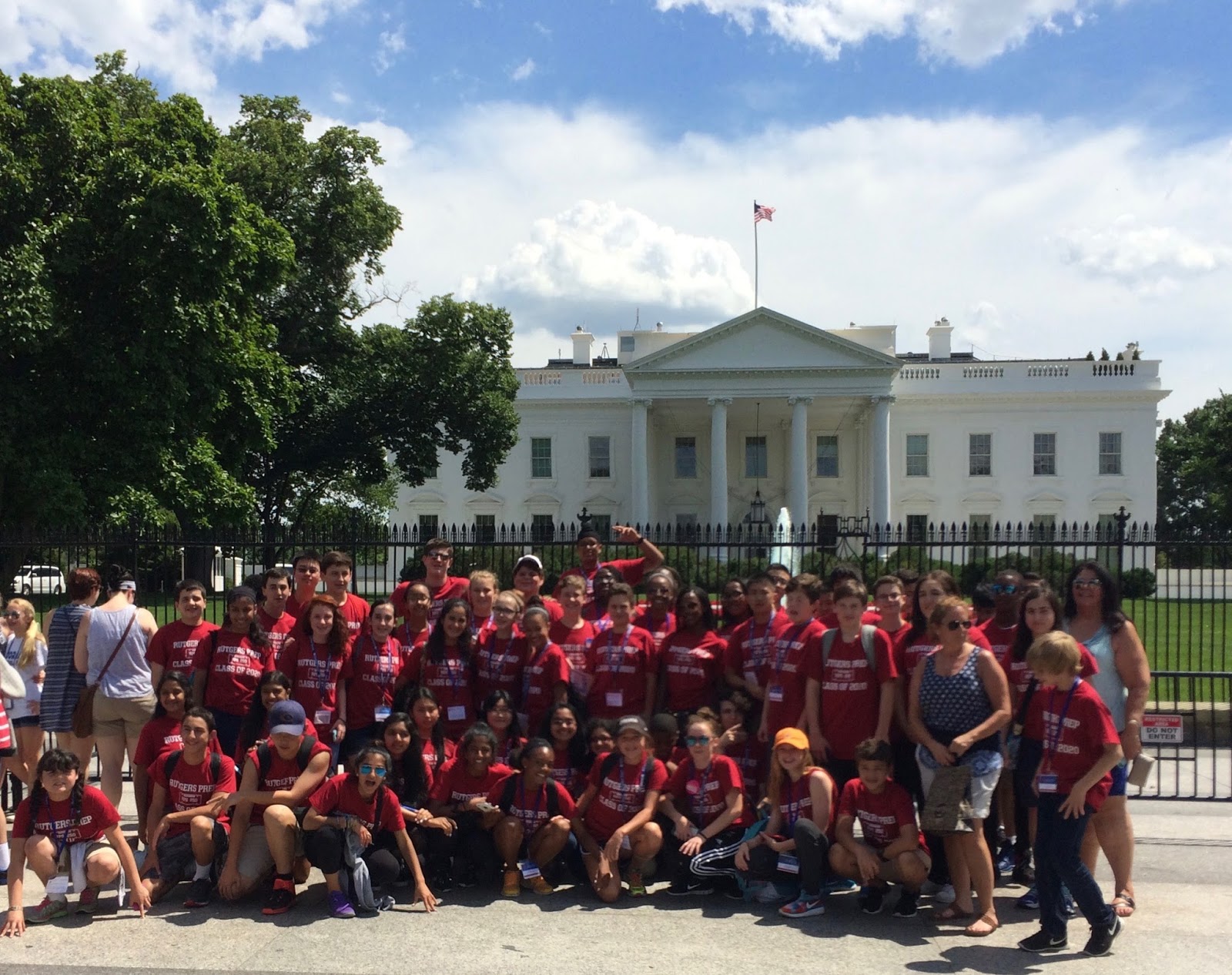
Last week, I accompanied the niblets on their 8th grade trip to Washington D.C. 


At the end of the week I proudly called their names as, one-by-one, they walked across the stage at our Middle School closing.  I have watched them go from awkward 11 and 12 year old 6th graders to much taller, deeper-voiced, and maturing 13 and 14 year old 8th graders.  The last three years have passed in the blink of an eye and now they headed off to the world of high school and years that, unbelievably, will pass even faster.  But they are enthusiastically ready for all that is coming their way, which is part of their enduring charm.

There was a catch in my throat as some of niblets walked past me to shake hands with the principal and grasp their certificate.  These kids taught me as much about myself as I taught them and I will always have a soft spot for them.  After all, they’re the niblets.


Saturday, April 23, 2016

Prep Scouts: Day 3

The last day of Prep Scouts was a field trip to celebrate Earth Day.  We went to one of the most lovely places in our area, Bowman’s Hill Wildflower Preserve.  Bowman’s Hill is an outdoor museum of Mother's Nature's wild-growing plants and it is a magical, lovely place.   The flowers and plants that can be seen at this time of year are called ephemerals because they can only bloom when there is warmth in the air and the plants can soak in the sunlight because the trees that grow above them have not yet leafed and blocked out the sunlight.  There were May apples, one of my favorite plants.


There were trilliums getting ready to bloom.


We saw bloodroot flowers and ferns just emerging alongside the bluebells and poppies.


There were fields and fields of bluebells alongside yellow celandine poppy flowers, so lovely they took your breath away.


Wildflowers in early Spring is guaranteed to charm even the most jaded of observers.  Of course, middle schoolers are not the least bit jaded and they enjoyed the beauty that we saw.  


We stopped in the gazebo to make a group photo.  Most of them held still long enough to have their picture made.


Wildflowers in April....that’s happy!

Friday, April 22, 2016

Prep Scouts: Day 2

Prep Scouts Day 2 found us busily at work with our friendship bracelets.  Most of the scouts had hardly finished their first before they were planning for their next bracelet, so that’s been fun.  Day 2’s second craft was the creation of seed starters made using shredded paper and flower seeds.  Each scout had the chance to make one.  


Our clever school assistant, Mrs. O, was the person who gave me the idea, and this one was a winner. Next week, we'll wrap up our creations so the students can bring them home and give a hand-made gift to their mom for Mother's Day.


Our cooking project was the creation of homemade salsa and guacamole, two activities the scouts enjoyed very much because both involved eating, a very popular activity for middle schoolers.


Today we head to a wildflower preserve just over the border in Pennsylvania.  It’s a beautiful place and with any luck the rain will hold off until we board the bus for the ride home.

Thursday, April 21, 2016

Prep Scouts: Day 1

We started Wednesday's Prep Scout fun with the creation of old-fashioned friendship bracelets, which the students weaved for themselves and one another.  The bracelets are fun and pretty quick gratification for our efforts.  Once we started them, the students sat outside and worked on the bracelets while we prepared our other crafts and activities in smaller groups.


Wednesday’s second craft was the creation of marbleized paper, a craft I learned about on Cup of Jo.  We followed the procedures as instructed and then set out our cards to dry.  They turned out very well and the students are excited to make more of them today.


Later on this week, we’ll write hand-written notes on our cards.  We’ll put those in the mail before Adventure Week ends on Friday.  We wrapped up our day by hand churning cream to make butter, which we slathered on saltine crackers and enjoyed very much.  Today will feature a new set of Prep Scout adventures.  That’s happy!


Wednesday, April 20, 2016

Adventure Week Starts Now!

Each year, the Middle School presses pause on our regular classes and we switch to immersion classes organized around a variety of topics.  We include the 5th graders who will join us for next year’s school year and teachers chooses classes and topics that they are excited to explore with a dozen or so students.  We invite teachers from both the Lower and Upper School to organize a class and then we turn everyone loose to learn something new and have fun while doing it.  From the exploration of baseball statistics to fishing along the banks of the river behind our school, the students get a chance to immerse themselves in something that excites them.  This year, there are more than a dozen Adventure Week courses on offer.

My Adventure Week course is a shared project with a fellow teacher and we call it Prep Scouts.  It’s all the fun of scout-style activities without the unattractive uniforms, tiresome cookie sales, or inexplicable discrimination.  Instead, we’re making crafts, trying our hand at some simple food prep activities, and enjoying the outdoors.  We’ll wrap up on Friday with a field trip to a local plant sanctuary, Bowman’s Hill Wildflower Preserve.


The supplies are organized and we’re ready to go.  For the next few days, I’ll chronicle the day’s Prep Scout activities.  Let the adventure begin!